Philosopher
Catharine Trotter Cockburn
1679–1749
Also known as Catharine Trotter
Playwright and philosopher who defended Locke's Essay and Samuel Clarke's moral theory, grounding morality in reflection on human and divine nature.
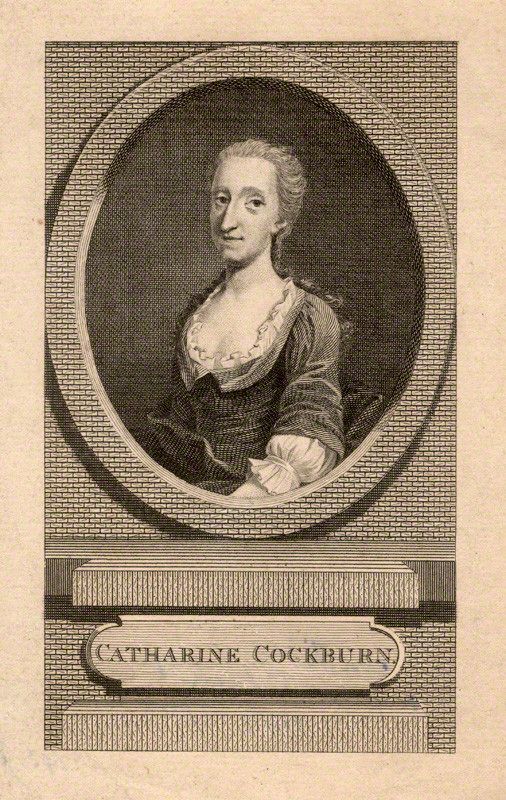

Catharine Trotter was born in London in 1679, taught herself to write as a child, and studied French, Latin grammar and logic. She first made her name as a playwright: Agnes de Castro was staged in 1695 and Fatal Friendship in 1698, both to acclaim.
At the same time she was studying Locke’s Essay Concerning Human Understanding, and in 1702 she published a defence of it against three anonymous pamphlets. Locke was so impressed that he sent her a gift of money and books. Her later works defended Clarke’s moral philosophy, and she also wrote on theology, including two vindications of Locke’s orthodoxy. She helped Thomas Birch edit her collected works, but died in 1749, two years before they appeared.
Key ideas
- A defence of Locke
- Answering anonymous pamphlets that attacked Locke’s Essay, Cockburn argued that his epistemology could ground moral knowledge, through reflection on the workings of our own minds, which reveals both human and divine nature.
- Morality fits our nature
- Morality is grounded in human nature, which God designed: some actions are fit and proper for beings like us and others are not. Cockburn held this view of moral fitness before Samuel Clarke made it famous, and later defended his version against its critics.
- Conscience as moral feeling
- Conscience is a “sudden affection”, a natural moral feeling. It is not a source of moral knowledge on its own, but complements a rational knowledge of moral laws and moves us to act on it.
- Virtue is not calculation
- Against Thomas Rutherforth, who defined moral goodness by good effects, Cockburn argued that even a hermit can be virtuous, since virtue does not rest on predicting how our actions will affect others.
- Tradition
- Western
- Region
- England
- Period
- Early modern
Influences
Where these links come from
- Catharine Trotter Cockburn drew on John Locke. Source: Patricia Sheridan, Catharine Trotter Cockburn, Stanford Encyclopedia of Philosophy
Key works
- The Defence of Mr. Locke's Essay of Human Understanding, 1702
- Remarks upon some Writers in the Controversy concerning the Foundation of Moral Duty and Moral Obligation, 1743
- Remarks upon the Principles and Reasonings of Dr. Rutherforth's Essay on the Nature and Obligation of Virtue, 1747
Sources
- Patricia Sheridan, Catharine Trotter Cockburn, Stanford Encyclopedia of Philosophy