Philosopher
Candrakīrti
c. 600 – c. 650 CE
Also known as Candrakirti, Chandrakirti
Madhyamaka commentator whose Clear Words defended Buddhapālita's reductio method against Bhāviveka, and whose 'Prāsaṅgika' reading became authoritative in Tibet.
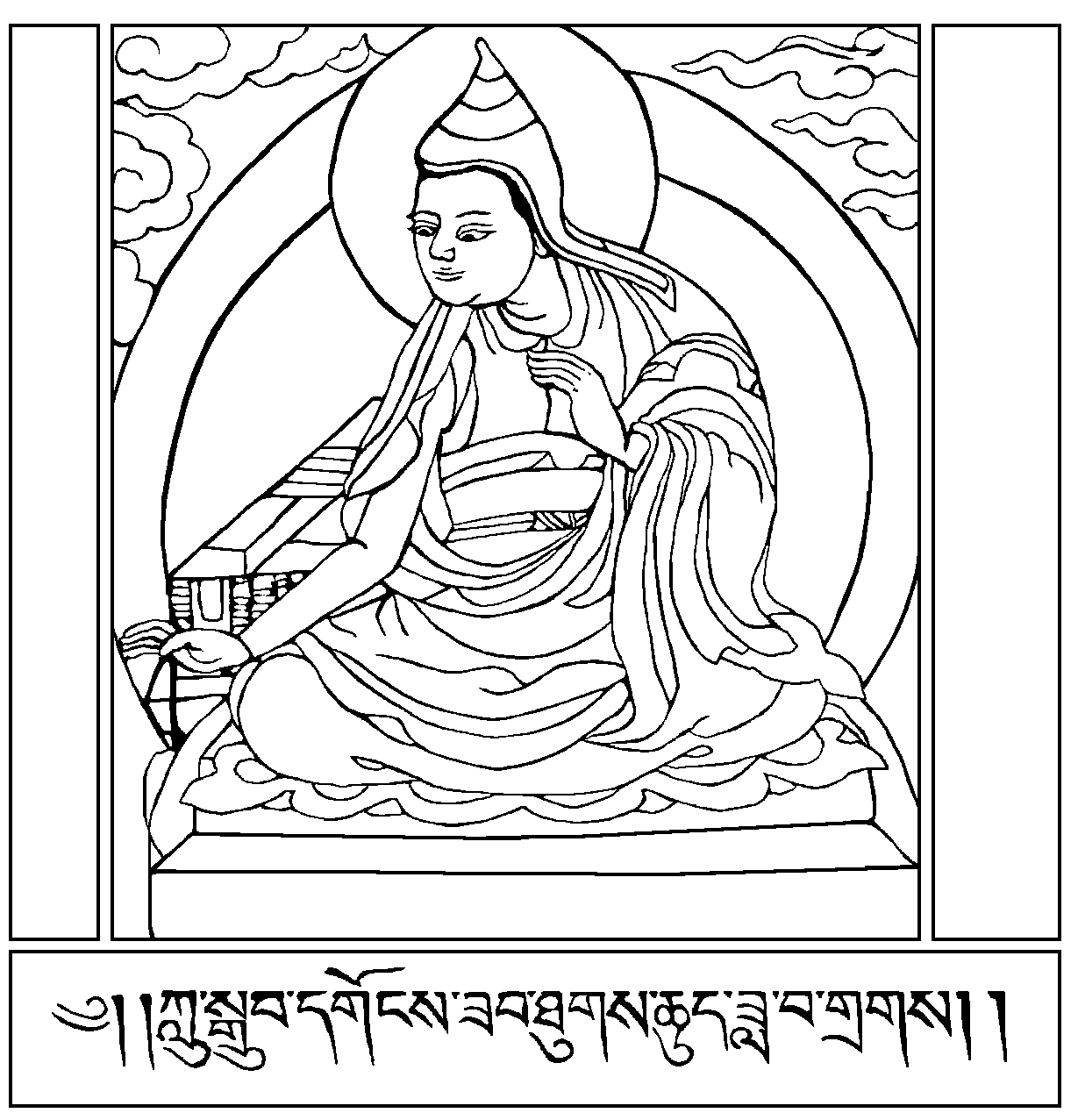

Candrakīrti wrote the Clear Words, the only commentary on Nāgārjuna’s Fundamental Verses on the Middle Way known to survive in Sanskrit, which preserves the Sanskrit text of Nāgārjuna’s verses. Much of its first chapter defends Buddhapālita’s approach and attacks Bhāviveka’s.
He had little influence in India itself, but re-emerged in Tibet, where many schools take his ‘Prāsaṅgika’ interpretation as authoritative; his Introduction to Madhyamaka is the main Madhyamaka text of many Tibetan monastic curricula.
Key ideas
- Reductio, not independent inference
- Following Buddhapālita, Candrakīrti held that a Mādhyamika should only draw out the absurd consequences of an opponent’s view, not offer formal inferences of his own, and he criticised Bhāviveka’s method as misguided.
- Analysis of concepts
- His arguments examine the concepts our explanations of experience take for granted, not experience itself: if a sprout cannot come from burning coals, then on the opponent’s assumptions it cannot come from a seed either.
- No privileged categories
- There can be no explanatory categories that escape the features of the conventional world, above all dependent origination; any analytic reasoning that claims to stand outside it fails.
- Tradition
- Indian
- Region
- India
- Schools
- Madhyamaka
- Themes
- What is ultimately real
Influences
Influenced by
Candrakīrtic. 600 – c. 650 CE
Influenced
Influenced by
Candrakīrtic. 600 – c. 650 CE
Influenced
Where these links come from
- Candrakīrti drew on Nāgārjuna. Source: Dan Arnold, Madhyamaka Buddhist Philosophy, Internet Encyclopedia of Philosophy
- Candrakīrti drew on Buddhapālita. Source: Dan Arnold, Madhyamaka Buddhist Philosophy, Internet Encyclopedia of Philosophy
- Candrakīrti argued against Bhāviveka. Source: Dan Arnold, Madhyamaka Buddhist Philosophy, Internet Encyclopedia of Philosophy
- Tsongkhapa drew on Candrakīrti. Source: Gareth Sparham and Chandra Chiara Ehm, Tsongkhapa, Stanford Encyclopedia of Philosophy
Key works
- Clear Words (Prasannapadā)
- Introduction to Madhyamaka (Madhyamakāvatāra)
Sources
- Dan Arnold, Madhyamaka Buddhist Philosophy, Internet Encyclopedia of Philosophy