Philosopher
Nāgārjuna
fl. 150–250 CE
Also known as Nagarjuna
Buddhist philosopher who founded the Madhyamaka ('middle way') school, arguing that all things are empty of intrinsic nature.
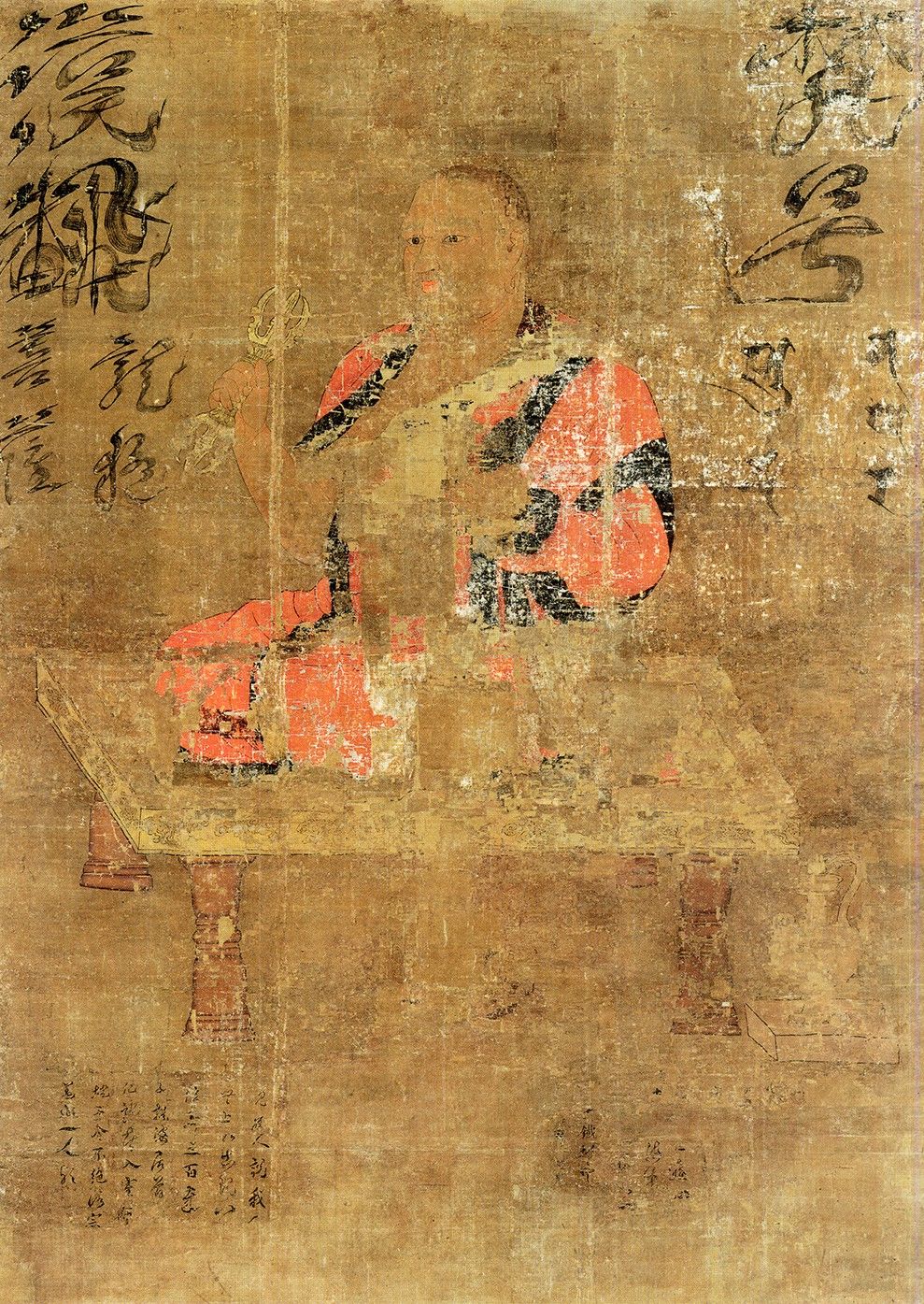

Nāgārjuna is widely regarded as the most important Buddhist philosopher after the Buddha. His central idea is emptiness (śūnyatā): nothing exists independently or has a fixed essence of its own, because everything arises in dependence on other things. He used rigorous arguments to show that views assuming such essences lead to contradictions.
Almost nothing certain is known about his life, and his dates are approximate.
Key ideas
- Emptiness (śūnyatā)
- Everything is empty of svabhāva, often translated “intrinsic nature”. Nothing exists as an independent substance with an existence of its own.
- No foundations
- The ways things depend on one another (on their parts, their causes and the mind that conceives them) never come to an end. In particular, nothing exists independently of how it is conceptualised.
- Causation examined
- Things aren’t produced from themselves, from other things, from both or from neither. Nāgārjuna concluded not that causation is impossible, but that it’s a mistake to think of cause and effect as having intrinsic natures.
- The two truths
- Nāgārjuna stressed that the Buddha taught two kinds of truth. Conventional truth can be expressed in language. The highest goal, nirvana, is a silence of the mind beyond concepts, and cannot.
- Tradition
- Indian
- Region
- India
- Schools
- Madhyamaka
Influences
Influenced by
Nāgārjunafl. 150–250 CE
Influenced
Influenced by
Nāgārjunafl. 150–250 CE
Influenced
Where these links come from
- Nāgārjuna drew on The Buddha. Source: Jan Westerhoff, Nāgārjuna, Stanford Encyclopedia of Philosophy
- Gauḍapāda drew on Nāgārjuna. Source: Devanathan Jagannathan, Gaudapada, Internet Encyclopedia of Philosophy
- Buddhapālita drew on Nāgārjuna. Source: Dan Arnold, Madhyamaka Buddhist Philosophy, Internet Encyclopedia of Philosophy
- Bhāviveka drew on Nāgārjuna. Source: Dan Arnold, Madhyamaka Buddhist Philosophy, Internet Encyclopedia of Philosophy
- Candrakīrti drew on Nāgārjuna. Source: Dan Arnold, Madhyamaka Buddhist Philosophy, Internet Encyclopedia of Philosophy
- Śrīgupta drew on Nāgārjuna. Source: Allison Aitken, Śrīgupta, Stanford Encyclopedia of Philosophy
- Śāntideva drew on Nāgārjuna. Source: Charles Goodman, Śāntideva, Stanford Encyclopedia of Philosophy
- Śāntarakṣita drew on Nāgārjuna. Source: James Blumenthal and James Apple, Śāntarakṣita, Stanford Encyclopedia of Philosophy
- Jayarāśi drew on Nāgārjuna. Source: Piotr Balcerowicz, Jayarāśi, Stanford Encyclopedia of Philosophy
Key works
- Fundamental Verses on the Middle Way (Mūlamadhyamakakārikā)
Terms on this page
- śūnyatā
- Emptiness: the central notion of Nāgārjuna’s Madhyamaka, that all things are empty of intrinsic nature (svabhāva), since nothing exists independently of other things.
- svabhāva
- Intrinsic nature or inherent existence: the nature a thing would have of itself, uncaused, unchanging and independent of anything else. Nāgārjuna argued that nothing has it.
Sources
- Jan Westerhoff, Nāgārjuna, Stanford Encyclopedia of Philosophy
- Richard Hayes, Madhyamaka, Stanford Encyclopedia of Philosophy