Philosopher
Sen no Rikyū
1522–1591
Also known as Sen no Rikyu, Rikyū, Rikyu
The pre-eminent Japanese tea master, whose wabi tea ceremony of austere, rustic simplicity resolved the tensions in sixteenth-century tea and opened new visions of equality.
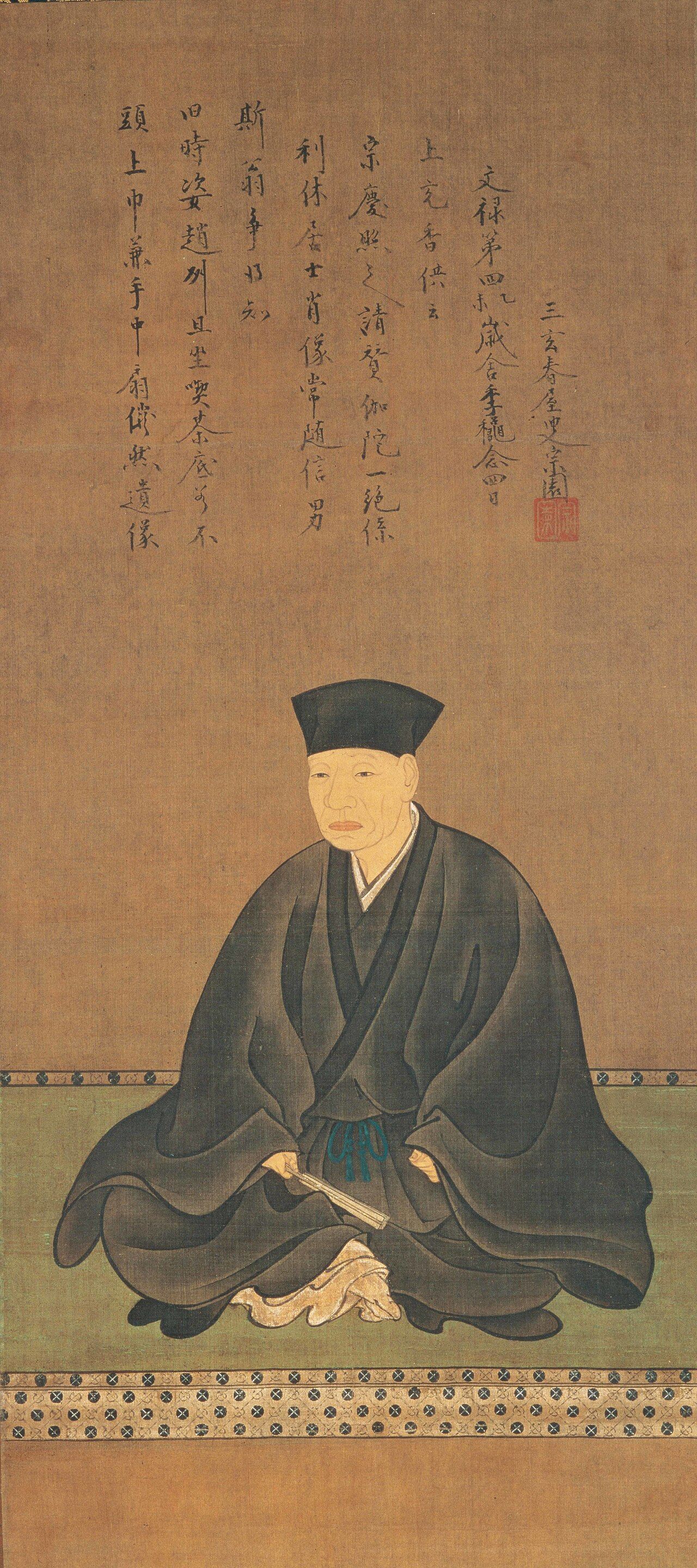

Sen no Rikyū is recognised as the pre-eminent Japanese tea master, and his role as an aesthete reached far beyond tea: he was a painter and poet, an arranger of flowers, a calligrapher and a landscape artist, and in time an influential adviser to the country’s rulers on cultural and artistic matters.
His innovations belonged to a lineage from the port city of Sakai, begun by the tea master Murata Shukō and continued by Takeno Jōō, both followers of Zen, who mentored Rikyū. Both had begun to bring the wabi aesthetic into tea; Rikyū’s refinement of it, some say its perfection, has come to eclipse their reputations.
Key ideas
- Wabi tea (wabicha)
- Rikyū’s tea ceremony built on the wabi aesthetic of simple, austere beauty, carrying further the work of his predecessors Murata Shukō and Takeno Jōō, his teacher.
- Between opulence and the grass hut
- Sixteenth-century tea had split two ways: displays of wealth with rare imported utensils in aristocratic halls, and an austere “grass-hut” style that celebrated poverty. Rikyū’s wabicha resolved the tensions between them.
- An equalising aesthetic
- Rikyū’s wabi aesthetic reached far beyond tea, opening new ideas of identity, social virtue, human existence and salvation, and in the end new possibilities for equality.
- Tradition
- Japanese
- Region
- Sakai and Kyoto, Japan
- Branches
- Aesthetics
- Period
- Medieval Japanese
- Themes
- Art and beauty
Terms on this page
- wabi
- Simple, austere beauty. Sen no Rikyū built his tea ceremony, wabicha, on it, against the display of wealth in aristocratic tea.
Sources
- Graham Parkes and Adam Loughnane, Japanese Aesthetics, Stanford Encyclopedia of Philosophy