Philosopher
Liang Shuming
1893–1988
Confucian defender who, in Eastern and Western Cultures and Their Philosophies, saw world cultures as three stages and predicted a renewed Chinese culture for the world.
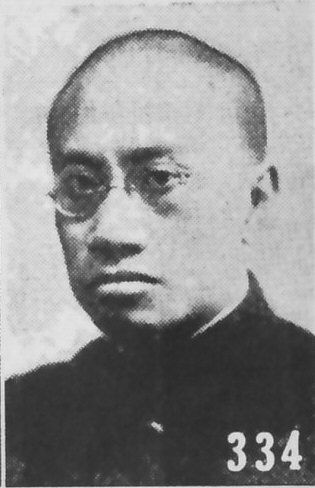

Liang Shuming was the most notable defender of Confucianism after Hu Shi and Chen Duxiu had rejected it in the early 1920s. In the 1923 debate over science and metaphysics he sided with Zhang Junmai and Liang Qichao against the scientists.
His 1922 book offered a large-scale comparison of Eastern and Western cultures, from a broadly spiritual outlook, though without arguments to found it.
Key ideas
- Three attitudes to life
- World cultures pass through three stages with three attitudes: the outward, striving attitude of modern Europe; the moderate, inward attitude of China; and the backward-turning, renouncing attitude of India.
- A morally precocious China
- China skipped the first stage and arrived early at the second, knowing that excess desire undermines happiness and seeking a balance of humanity and nature, reason and emotion.
- A renewed Chinese culture
- Indian culture should be set aside as useless, Western culture modified with true happiness in view, and Chinese culture reasserted; the world culture, he predicted, would be a renewed Chinese culture.
- Tradition
- Chinese
- Region
- China
- Schools
- Confucianism
Key works
- Eastern and Western Cultures and Their Philosophies (Dongxi wenhua jiqi zhexue), 1922
Sources
- Yih-Hsien Yu, Chinese Philosophy, Modern, Internet Encyclopedia of Philosophy
- David Elstein, Modern Confucianism, Stanford Encyclopedia of Philosophy