Philosopher
Kiyozawa Manshi
1863–1903
Shin Buddhist priest trained in Western philosophy who sought a 'spiritual living' grounded in personal encounter with the absolute, and worked to modernise his tradition.
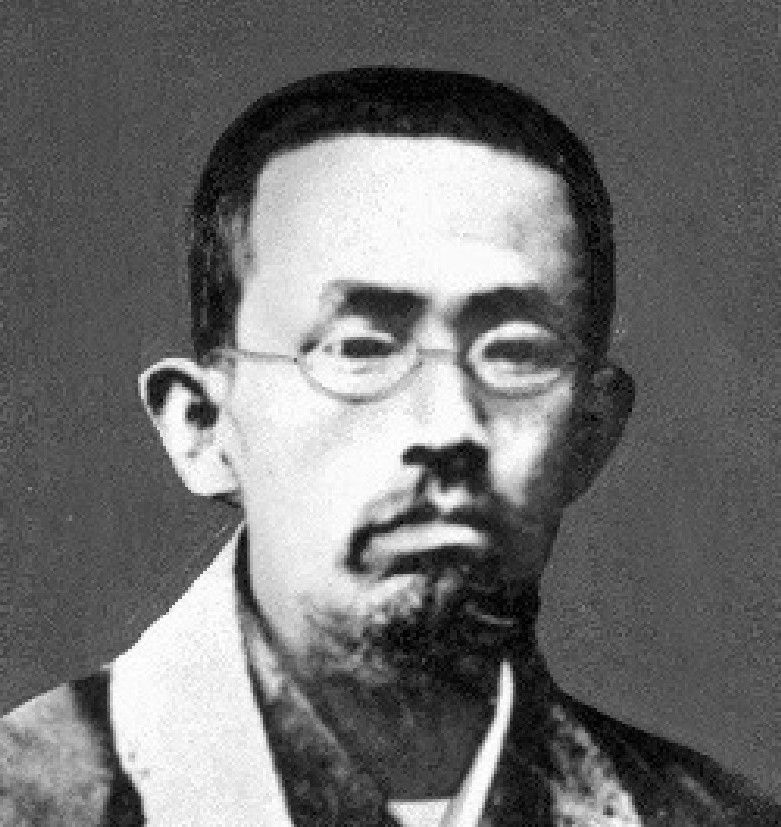

Kiyozawa Manshi was a Shin Buddhist priest who had studied Western philosophy at Tokyo Imperial University, and whose reforms shaped the Higashi Honganji tradition. Unusually, his orientation was practical: he explored how religious life meets the absolute, and his journals mix passages from Epictetus with Bible verses.
He founded the magazine The World of Spiritual Living, and his disciple Soga Ryōjin continued his concern with the personal immediacy of religious teaching. He died young, in 1903.
Key ideas
- Spiritual living
- Near the end of his life Kiyozawa founded a movement of ‘spiritual living’ (seishin-shugi), which he defined as a personal encounter with the absolute.
- Answering the Christian critique
- Kiyozawa accepted the force of the Christian charge that Buddhism lacked power over daily life, and his pursuit of immediate experience and self-examination can be read as a Buddhist response to it.
- Reforming the institution
- He worked to democratise and modernise Shin Buddhist temples and education, influencing later thinkers of the Higashi Honganji tradition.
- Tradition
- Japanese
- Region
- Japan
- Branches
- Philosophy of religion
- Period
- Modern Japanese
Sources
- Dennis Hirota, Japanese Pure Land Philosophy, Stanford Encyclopedia of Philosophy