Philosopher
Judah Abrabanel
c. 1465 – after 1521
Also known as Leone Ebreo, Leo Hebraeus
Jewish philosopher of the Renaissance, known as Leone Ebreo, whose Dialogues of Love present love as both a sensual and a cosmic principle binding the universe in a circle.
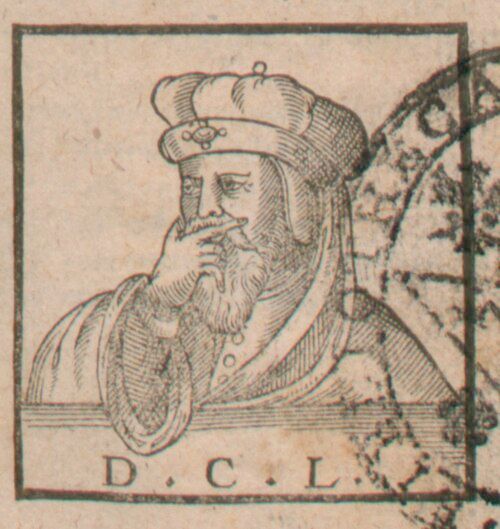
Judah Abrabanel was born in Lisbon between 1460 and 1470, the eldest son of the philosopher and statesman Isaac Abrabanel, and was educated in both Jewish and secular learning. The family moved to Spain, where his father served Ferdinand and Isabella, and left for Naples after the expulsion of the Jews from Spain; Judah’s young son was seized in Portugal and forcibly baptised. When the French took Naples in 1495 he fled again, to Genoa, Barletta and Venice.
He is last heard of in 1521, giving medical care to a cardinal; the Dialogues of Love appeared after his death, in Rome in 1535. Cast as conversations between Philo, a philosopher, and Sophia, his student, they belong to the Renaissance genre of treatises on love, while drawing freely on the cosmology of his Jewish and Islamic predecessors. Scholars still debate whether he is the last medieval Jewish philosopher or the first modern one.
Key ideas
- Love as a cosmic principle
- Love is not only a human passion but a principle of the whole universe; by love of his own infinite beauty, God brings forth the first intelligence. Love directs the soul and intellect towards ever more spiritual things.
- The circle of love
- All things go out from their first origin and pass through each level of being in turn, then return to it. This circle has two halves: one from the origin to the point furthest away, the other from there back to the beginning.
- Sensual love as a gateway
- God, being perfect beauty, lacks no beauty and so cannot have the love that desires what it lacks. Judah nonetheless celebrated sensual love, as the way into cosmic and spiritual love.
- Tradition
- Jewish
- Region
- Lisbon, Spain and Italy
- Schools
- Platonism
- Themes
- Love and friendship
Influences
Influenced by
Judah Abrabanelc. 1465 – after 1521
Influenced by
Judah Abrabanelc. 1465 – after 1521
Where these links come from
- Judah Abrabanel drew on Avicenna. Source: Aaron Hughes, Judah Abrabanel, Stanford Encyclopedia of Philosophy
- Judah Abrabanel drew on al-Ghazali. Source: Aaron Hughes, Judah Abrabanel, Stanford Encyclopedia of Philosophy
- Judah Abrabanel drew on Maimonides. Source: Aaron Hughes, Judah Abrabanel, Stanford Encyclopedia of Philosophy
Key works
- Dialogues of Love (Dialoghi d'amore)
Sources
- Aaron Hughes, Judah Abrabanel, Stanford Encyclopedia of Philosophy