Philosopher
Dōgen
1200–1253
Also known as Dogen, Dōgen Kigen
Founder of Japanese Sōtō Zen, who taught 'just sitting' as practice that is already realisation, and wrote of 'being-time', the inseparability of being and time.
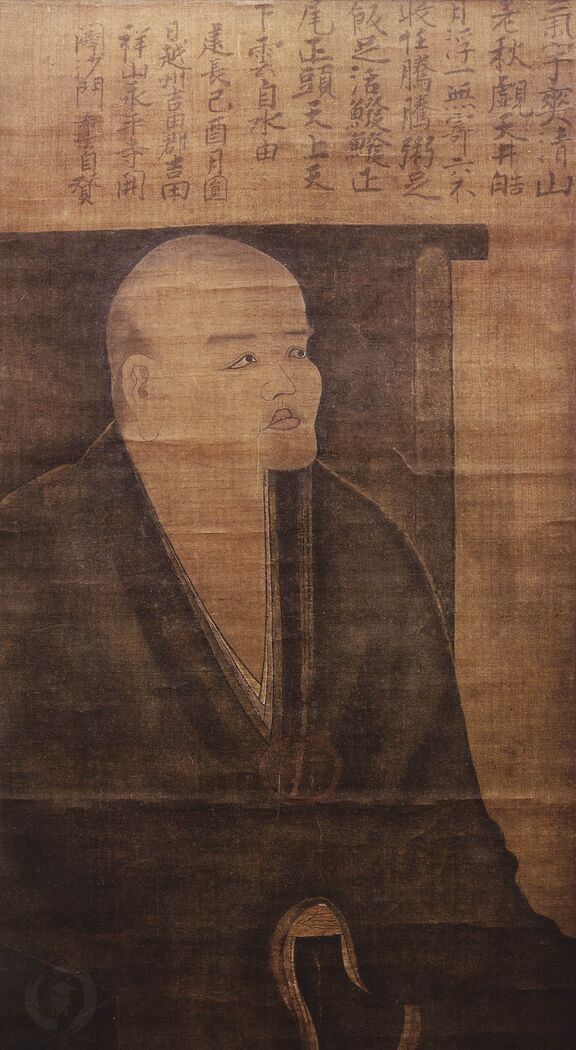

Dōgen founded the Japanese Sōtō school of Zen. He took as central to every Buddhist tradition the nondual state of body and mind reached in seated meditation (zazen) under a master’s guidance, and, unlike many medieval Buddhists, did not accept the idea that the world had entered a degenerate age of the Dharma.
He distinguished the raw presence of phenomena, before meaning, from the meanings they take on within a context, an account of language closely paralleled by the modern philosopher Ueda Shizuteru.
Key ideas
- Just sitting
- Instead of an elaborate system of kōans, the Sōtō school practises ‘just sitting’ (shikan taza). Dōgen called it ‘practice-realisation’: sitting is not a means to enlightenment but its enactment, closing the gap between potential and actual.
- Being-time
- Being cannot be apart from time, nor time from being: a thing becomes spatial by unfolding in time, and temporal by unfolding in space. Dōgen’s word for this is uji, ‘being-time’.
- Forgetting the self
- Zen asks the practitioner to ‘forget the I’ in every act of mind, body or speech, overcoming the split between subject and object.
- Tradition
- Japanese
- Region
- Japan
- Period
- Medieval Japanese
- Themes
- Time
Key works
- Treasury of the True Dharma Eye (Shōbōgenzō)
Terms on this page
- uji
- ‘Being-time’: Dōgen’s word for the inseparability of being and time, each thing unfolding in time and time existing only in things.
Sources
- Shigenori Nagatomo, Japanese Zen Buddhist Philosophy, Stanford Encyclopedia of Philosophy
- Thomas Kasulis and Raquel Bouso, Japanese Philosophy, Stanford Encyclopedia of Philosophy