Philosopher
Caitanya
1485–1533
Also known as Chaitanya, Caitanya Mahāprabhu
Vaiṣṇava teacher whose 'inconceivable difference and non-difference' founded the Gauḍīya tradition, from which the Hare Krishna movement descends.
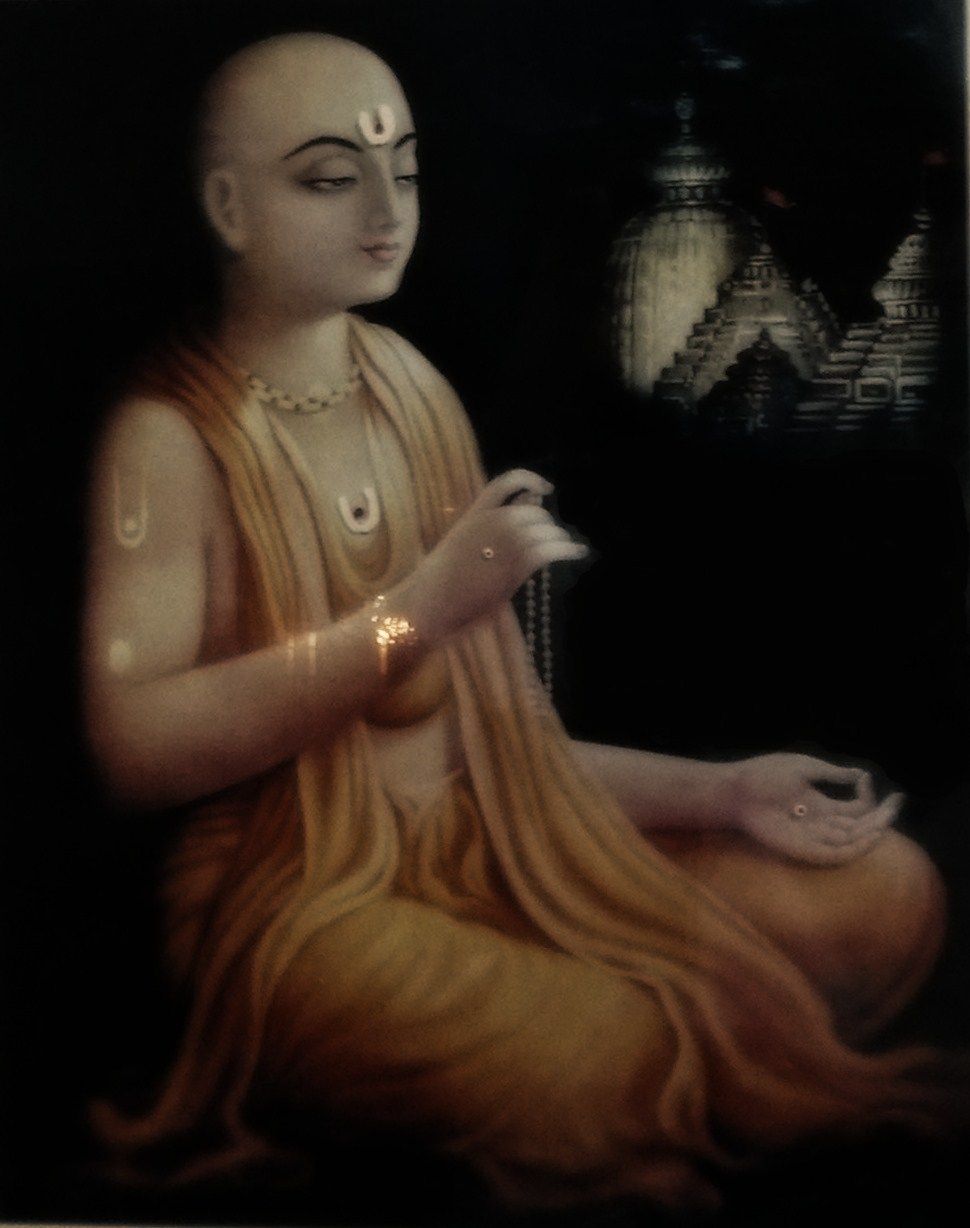

Caitanya was a medieval Vaiṣṇava philosopher and theologian, known mainly as the founder of a religious movement rather than as a philosopher in his own right. His teachings were recorded and developed by his followers, among them Jīva Gosvāmin, whose commentary on the Bhāgavata Purāṇa is widely known.
His tradition, Gauḍīya Vaiṣṇavism, still thrives in West Bengal, and its best-known offshoot is the International Society for Krishna Consciousness, the ‘Hare Krishnas’.
Key ideas
- Inconceivable difference and non-difference
- Caitanya’s school, Acintya Bhedābhedavāda, uses inconceivability to reconcile what seems contradictory: Brahman is at once one and many, and God is both different and not different from his powers.
- Devotion to a real God
- Bhedābheda thought, unlike Advaita, can accept that God, in his qualified form, is real, which made it a natural foundation for devotional theology such as Caitanya’s.
- A teaching carried by followers
- Caitanya wrote nothing down. His philosophy was set out by followers such as Jīva Gosvāmin.
Sources
- Andrew J. Nicholson, Bhedabheda Vedanta, Internet Encyclopedia of Philosophy