Philosopher
Isaac Israeli
c. 855 – c. 955 CE
Also known as Isaac ben Solomon Israeli
Physician to the first Fatimid caliph and one of the earliest Jewish Neoplatonists, whose Arabic works, drawing on al-Kindi, were widely read in Hebrew and Latin translation.
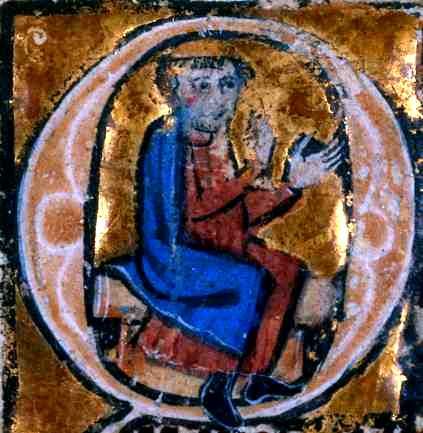

Isaac Israeli lived for about a century, by most accounts, though the dates of his birth and death are uncertain. He lived in Egypt until middle age and moved to Kairouan, in Tunisia, around 905–907, where he became court physician to Ubayd Allah al-Mahdi, first of the Fatimid caliphs. His medical treatises were respected by physicians in Muslim and Christian lands for centuries.
He was among the first medieval Jewish Neoplatonists, less original than later figures such as Ibn Gabirol or Maimonides, but representative of the prevailing view: Aristotle read through a Neoplatonic lens. His philosophical works, written in Arabic, were translated into Hebrew and Latin, and later Jewish and Christian writers quoted him, sometimes without saying so.
Key ideas
- Light and shadow
- Emanation is pictured as light spreading from its source without diminishing it. Israeli added shadow: each emanated level is bright near its source and shaded further away, and the next level begins in that shade, which is why things grow more bodily and imperfect as they descend.
- Purification, illumination, union
- The rational soul rises in three stages: purification, by turning from bodily desires, by worship and right conduct, and by studying philosophy; illumination by truth; and a union in which the soul becomes spiritual and divine, though it never becomes one with the Creator.
- Departing from al-Kindi
- Much of his work paraphrases al-Kindi and Neoplatonist sources, but Israeli diverged from al-Kindi in places, adding the emanation of shadow and reversing the order of intellection that al-Kindi described.
- Tradition
- Jewish
- Region
- Egypt and Kairouan
- Schools
- Neoplatonism
- Themes
- The self
Influences
Where these links come from
- Isaac Israeli drew on al-Kindi. Source: Leonard Levin, R. David Walker and Shalom Sadik, Isaac Israeli, Stanford Encyclopedia of Philosophy
Key works
- Book of Definitions
- Book of the Elements
Sources
- Leonard Levin, R. David Walker and Shalom Sadik, Isaac Israeli, Stanford Encyclopedia of Philosophy